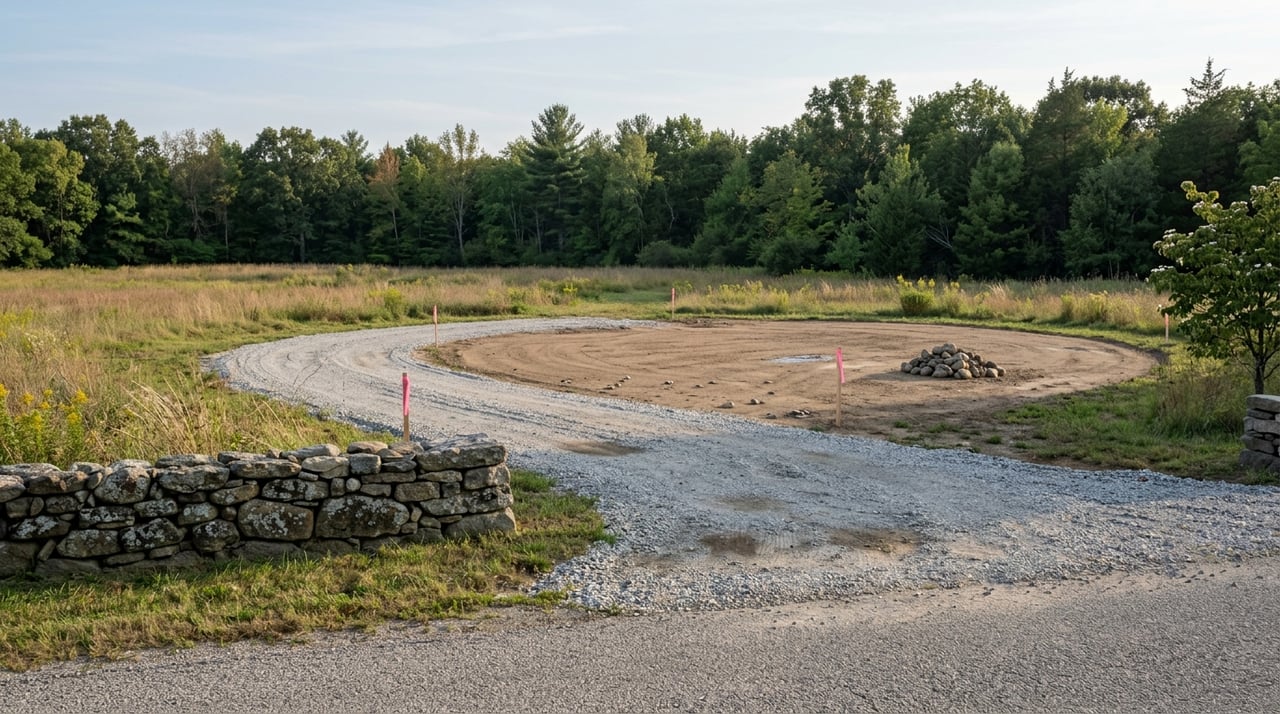
Thinking about buying land in Page County for a future home? It can be exciting to picture mountain views, extra privacy, or room to build exactly what you want. It can also get complicated fast if a parcel looks great online but turns out to have issues with zoning, access, floodplain limits, or well and septic approvals. This guide will walk you through what to check before you buy so you can move forward with more clarity and confidence. Let’s dive in.
Why Page County attracts land buyers
Page County sits in Virginia’s Shenandoah Valley between the Blue Ridge and Massanutten Mountains. The county includes the incorporated towns of Luray, Shenandoah, and Stanley, and its planning materials describe a wide mix of parcel types across mountain areas, forested land, farms, floodplains, and lots near town.
That variety gives you options. You may find a smaller in-town or town-edge lot with easier utility access, or you may prefer a rural parcel with more acreage and separation. The key is knowing that each setting can come with a different path to building.
Page County parcel types to expect
Town-edge lots
Valley-floor and town-adjacent parcels are often the most practical starting point if your goal is to build sooner and keep site work simpler. These areas are the most likely places to have municipal water and sewer service, along with shorter utility runs.
Page County’s new-home packet says that if you plan to connect to town water and sewer, the town must verify tap fees in writing before the county will issue a building permit. Official town pages also show municipal water and sewer services in both Shenandoah and Stanley.
Rural and mountain parcels
Foothill, forested, and mountain parcels often fall within the county’s Woodland-Conservation district. The county says this district is intended to preserve rural atmosphere, open space, scenic landscape, farmland, and mountain and forest areas.
For buyers who want privacy and scenery, this is often where the search begins. County planning materials also note that this district recognizes single-family homes, manufactured homes, tiny homes, and other low-intensity uses, but you should always verify what is allowed on the specific parcel you are considering.
Small lots to larger acreage
Page County land listings and county planning examples show a wide range of sizes. Active future-home parcels often appear in the low single-digit acre range, with examples around 1.235 acres, 3.26 acres, and 3.59 acres.
At the same time, county materials also include much larger parcels such as 36.718 acres and 130.05 acres in agricultural and woodland special-use cases. That means you can find everything from a modest homesite to a larger tract, but the rules and costs can shift quite a bit as acreage changes.
Zoning questions to ask first
Before you focus on views or price, start with zoning. Page County is still revising and updating its zoning and subdivision ordinances, so it is especially important to confirm the exact rules that apply now rather than relying on older assumptions.
The county’s zoning office handles zoning approvals, variances, rezoning, special use requests, and enforcement. The county also states that no building or land use should move forward unless it conforms to the zoning ordinance.
Minimum lot size matters
In the county code excerpt posted with the 2026 planning packet, both Agriculture and Woodland-Conservation list a minimum lot size of 1.75 acres and 150 feet of width at the setback line. Agriculture is intended to preserve agricultural land, while Woodland-Conservation covers many mountain, forested, floodplain, and open-space areas.
That does not mean every 1.75-acre parcel is automatically ready for a home. It does mean you should compare the parcel’s actual dimensions, zoning district, and setbacks before you assume it will work for your plans.
Future subdivision rights may not be simple
If you are hoping to buy land now and split it later, verify that early. County planning materials posted in January 2026 still described the current subdivision ordinance as allowing 25-acre divisions in Agriculture and Woodland-Conservation, along with 1.75-acre non-family and family divisions with five-year restrictions.
That same packet says the Board approved VDOT entrance approval requirements for those division types in 2025. Because the county’s zoning and subdivision update is ongoing, this is one of the biggest areas where buyers should confirm current subdivision rights before making assumptions.
GIS and parcel records are a must
Page County’s real-estate and GIS tools can show acreage, lot dimensions, deed references, and related parcel data. These tools are a strong first step when you want to confirm whether a property is likely to be a practical homesite, a parcel with limited use, or simply a tax parcel that may not support your plans.
Utilities and access can make or break a lot
A beautiful parcel is only part of the story. Access, water, sewer or septic, electricity, and internet can all affect your budget, timeline, and ability to build.
Public water and sewer
If the lot is near town, ask whether public water and sewer are available. Then confirm whether connection is actually possible for that parcel and what the tap fees will be.
This step matters because Page County requires written verification from the town for water and sewer tap fees before issuing a building permit. Availability nearby does not always mean a simple or low-cost connection.
Well and septic approval
If the parcel does not have public water and sewer, check well and septic feasibility as early as possible. Virginia Department of Health guidance says the owner or agent must obtain permits to construct a private well and sewage disposal system before the county building official can issue a building permit.
Page County’s new-home packet reinforces the same point for local buyers. In practical terms, that means you do not want to wait until after contract ratification to find out whether the land can support your planned home.
Road frontage and entrance permits
Access is another major checkpoint. If a new entrance will be created from a state-maintained road, the county says a VDOT entrance permit is required.
The county also asks for a survey plat or sketch, the deed, and staking and flagging of the proposed structure location with the zoning application. That means even early planning steps may require more preparation than many buyers expect.
Floodplain review
Some Page County properties include land in a floodplain. The county says floodplain development permits are needed when part of the property lies in a floodplain, and its GIS web apps include a floodplain map for that reason.
This does not automatically rule out a property, but it does mean you should understand where a home could realistically go and whether floodplain regulations will affect design, cost, or permitting.
Electricity and internet
County planning materials say Shenandoah Valley Electric Cooperative provides electricity, and the county has promoted an All Points Broadband fiber project. Even so, rural service can vary.
If dependable internet matters for work, school, or day-to-day life, verify service by address instead of assuming coverage from a general map or nearby road.
Building timelines are often longer than buyers expect
Land purchases usually involve more steps than existing-home purchases. Page County says zoning permit review can take up to two weeks, and a zoning permit expires after six months if work has not started, though it can be renewed once for another six months.
Site work can also trigger added review. The county says land-disturbing activities of 10,000 square feet or more need erosion and sediment control review, while one acre or more of disturbance requires a stormwater permit and engineer-prepared plans.
That does not mean building in Page County is out of reach. It simply means your timeline should include due diligence, permit review, and site-prep planning from the start.
Financing a Page County land purchase
Financing land is often different from financing an existing home. The right loan option can depend on the parcel size, whether you plan to build soon, and how standard or non-standard the property looks to a lender.
Rural eligibility programs
USDA Rural Development offers single-family housing programs designed to help qualifying buyers buy, build, or repair homes in rural areas. Eligibility depends on income and property location.
For a rural Page County parcel, the USDA property-eligibility tool is the official place to check whether the address may qualify. This can be helpful if you are comparing affordability options for a future home build.
FHA, conventional, and lot complexity
Consumer finance guidance notes that FHA loans are private loans insured by FHA and may allow down payments as low as 3.5 percent. The same guidance also notes that conventional loans can be harder to use on properties with non-standard features, such as more than 10 acres of land or properties that are difficult to appraise.
For many future-home buyers, that means it makes sense to compare several financing paths instead of assuming one loan type will fit every parcel.
Construction-to-permanent options
Fannie Mae supports construction-to-permanent financing in both single-closing and two-closing formats. This structure can be useful when you buy land and later convert to a permanent mortgage after the home is built.
In Page County, that can be especially relevant because the land phase often includes extra due diligence on access, utilities, and soil approval before construction begins.
Carrying costs and land-use assessment
If you are considering a larger parcel, ask about long-term holding costs too. Page County’s land-use assessment program can affect carrying costs because the county describes it as a deferred tax program.
Applications are accepted from September 1 through November 1 for the next assessment year. Agriculture, horticulture, and open-space use require at least 5 acres, while forest use requires at least 20 acres.
A smart pre-offer checklist
Before you make an offer on land in Page County, focus on the items that most directly affect whether the parcel is a true buildable homesite.
- Confirm the zoning district
- Verify legal access
- Check floodplain status
- Prove well and septic feasibility if public utilities are not available
- Match the financing type to the parcel size and your building timeline
- Review GIS and parcel records for dimensions, acreage, and deed references
- Ask whether public water and sewer connections, if available, have verified tap fees in writing
This checklist can help you separate attractive acreage from a workable homesite. It also helps you make decisions with fewer surprises later.
If you are looking at land in Page County and want a steady, detail-focused guide through the process, Katie Krivosheyev can help you evaluate options, coordinate the right next steps, and move forward with confidence.
FAQs
What should you check before buying land in Page County for a future home?
- Confirm zoning, legal access, floodplain status, well and septic feasibility, parcel dimensions, and financing fit before moving forward.
Are all Page County land parcels buildable for a future home?
- No. A parcel may have acreage on paper but still face limits related to zoning, access, floodplain conditions, setbacks, or utility feasibility.
Do you need well and septic approval for rural land in Page County?
- Yes, if the parcel does not have public water and sewer, permits for a private well and sewage disposal system must be obtained before a building permit can be issued.
Can you subdivide land later in Page County?
- Possibly, but subdivision rights should be verified directly because the county is updating its zoning and subdivision ordinances and rules can change.
Are public water and sewer available on Page County lots?
- Some valley-floor and town-edge parcels are more likely to have access to municipal water and sewer, but you should confirm actual availability and written tap-fee verification for the specific lot.
Does floodplain status matter when buying land in Page County?
- Yes. If part of the property lies in a floodplain, development may require additional permits and may affect where and how you can build.